Military Athletes conclude Milano Cortina 2026 with depth, dominance and historic milestones
MILANO / ANTERSELVA / LIVIGNO — As the Milano Cortina 2026 Winter Olympic Games reached their conclusion, athletes in uniform once again demonstrated their decisive influence across multiple disciplines. From alpine skiing and biathlon to ski mountaineering, short track, bobsleigh, curling and freestyle skiing, military competitors played a central role in shaping the competitive narrative of these Winter Games.
The closing stretch between 19 and 22 February 2026 further reinforced their presence at the highest level.
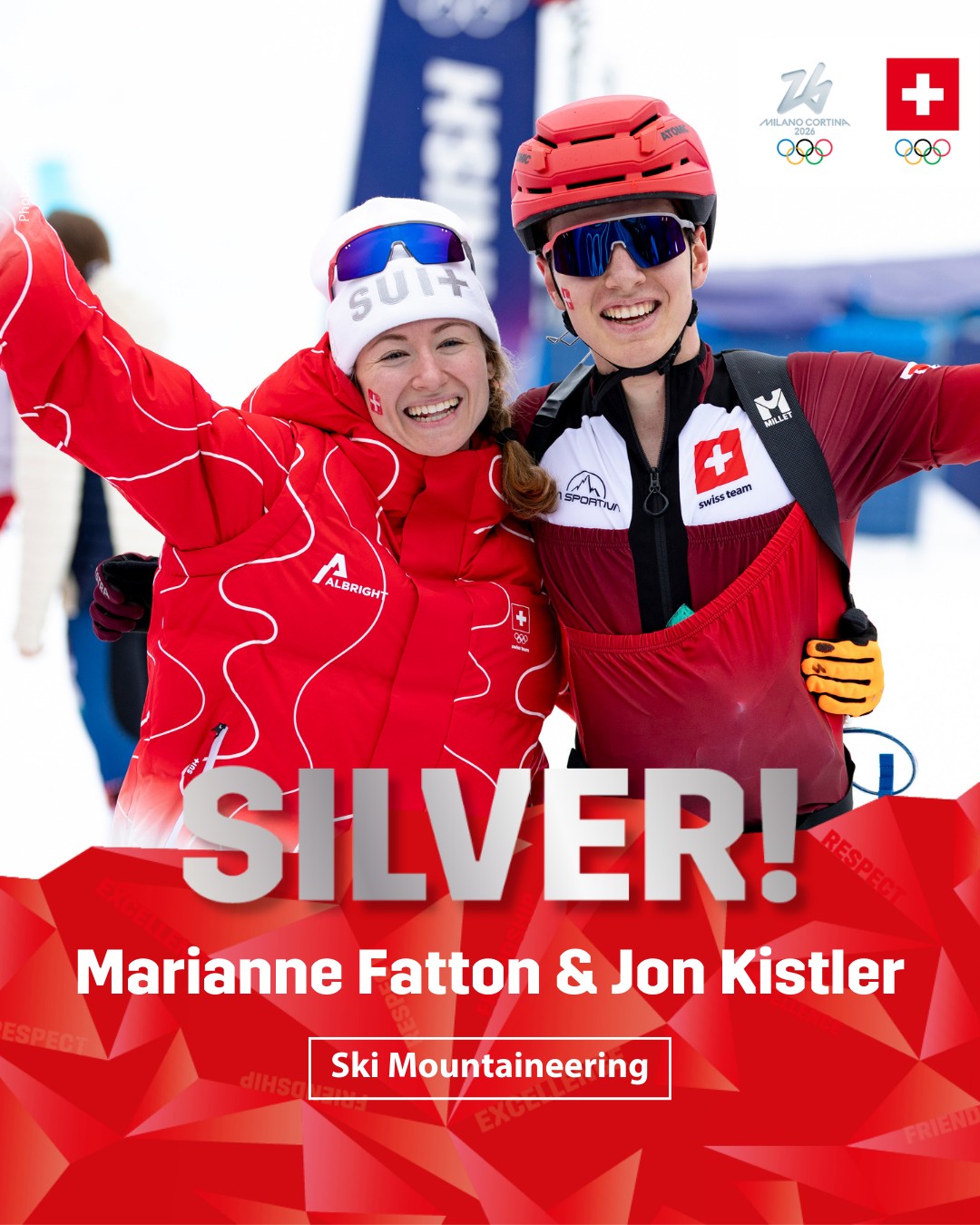
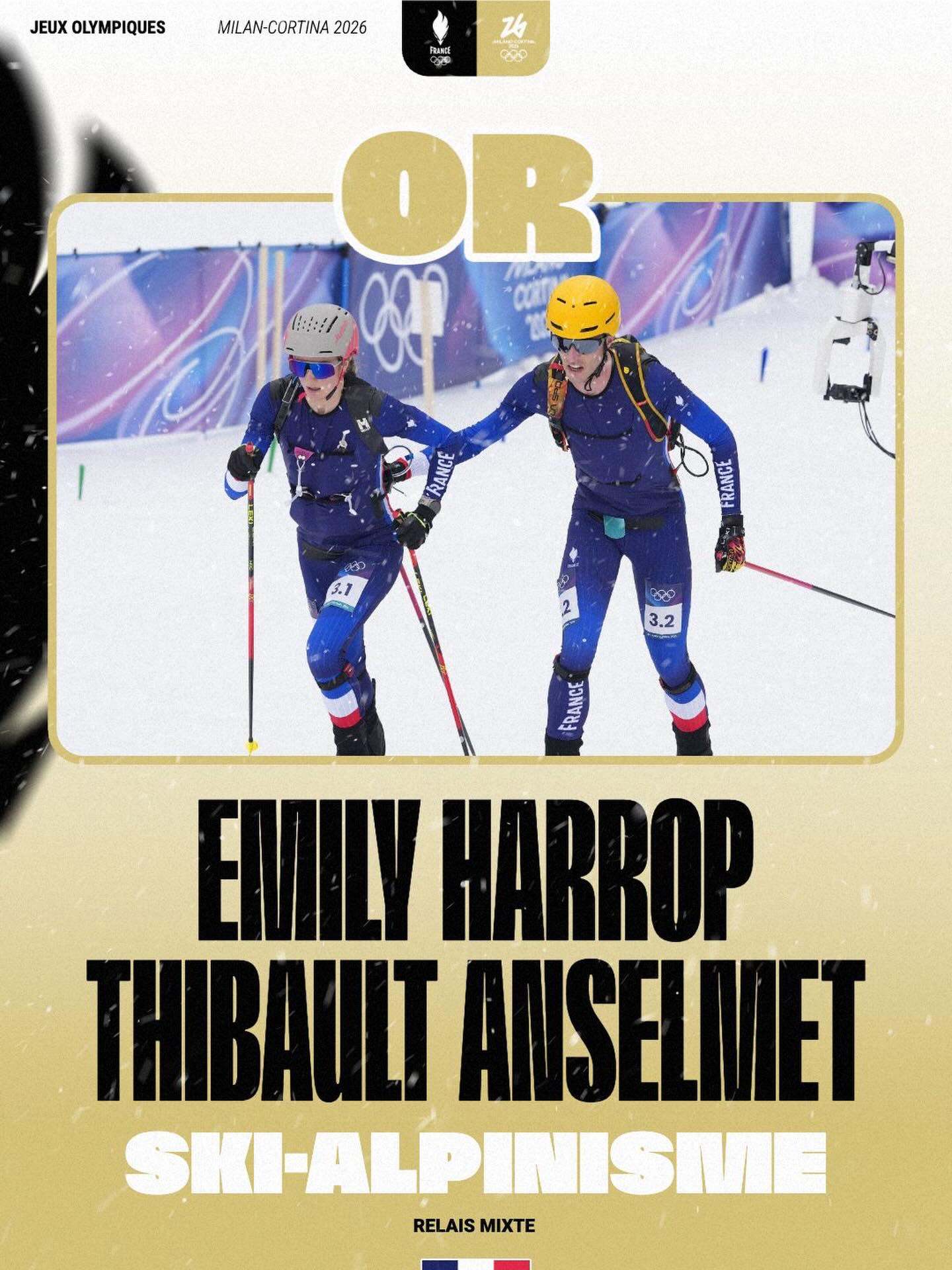
Ski mountaineering’s Olympic debut provided historic firsts. Marianne Fatton (SUI) claimed the inaugural women’s sprint gold, while SGT Emily Harrop (FRA) secured silver and SGT Thibault Anselmet (FRA) added bronze in the men’s sprint. Two days later, Harrop and Anselmet (FRA) combined to win gold in the mixed relay, mastering transitions and pacing to convert earlier podium finishes into Olympic success. Marianne Fatton (SUI) also returned to the podium with silver in the mixed relay.
Biathlon delivered another highlight in Anterselva. MDL Océane Michelon (FRA) captured gold in the women’s 12.5 km mass start with controlled shooting and a decisive final lap, adding to France’s strong relay performances earlier in the Games.
Freestyle skiing also produced remarkable results. Noé Roth (SUI) secured silver in the men’s aerials before adding another silver in the mixed team aerials alongside compatriot Pirmin Werner (SUI). In ski cross, Alex Fiva (SUI) captured bronze after an aggressive and tactical run through the knockout rounds. Italy also celebrated a major ski cross success, with Simone Deromedis (ITA) winning gold and Federico Tomasoni (ITA) taking silver, confirming the strength of military athletes in the discipline.
Curling brought further Swiss podium finishes. Yannick Schwaller (SUI), Pablo Lachat-Couchepin (SUI) and Kim Schwaller (SUI) secured bronze in the men’s tournament, while Selina Witschonke (SUI) added silver in the women’s tournament, underlining Switzerland’s depth in strategic team disciplines.
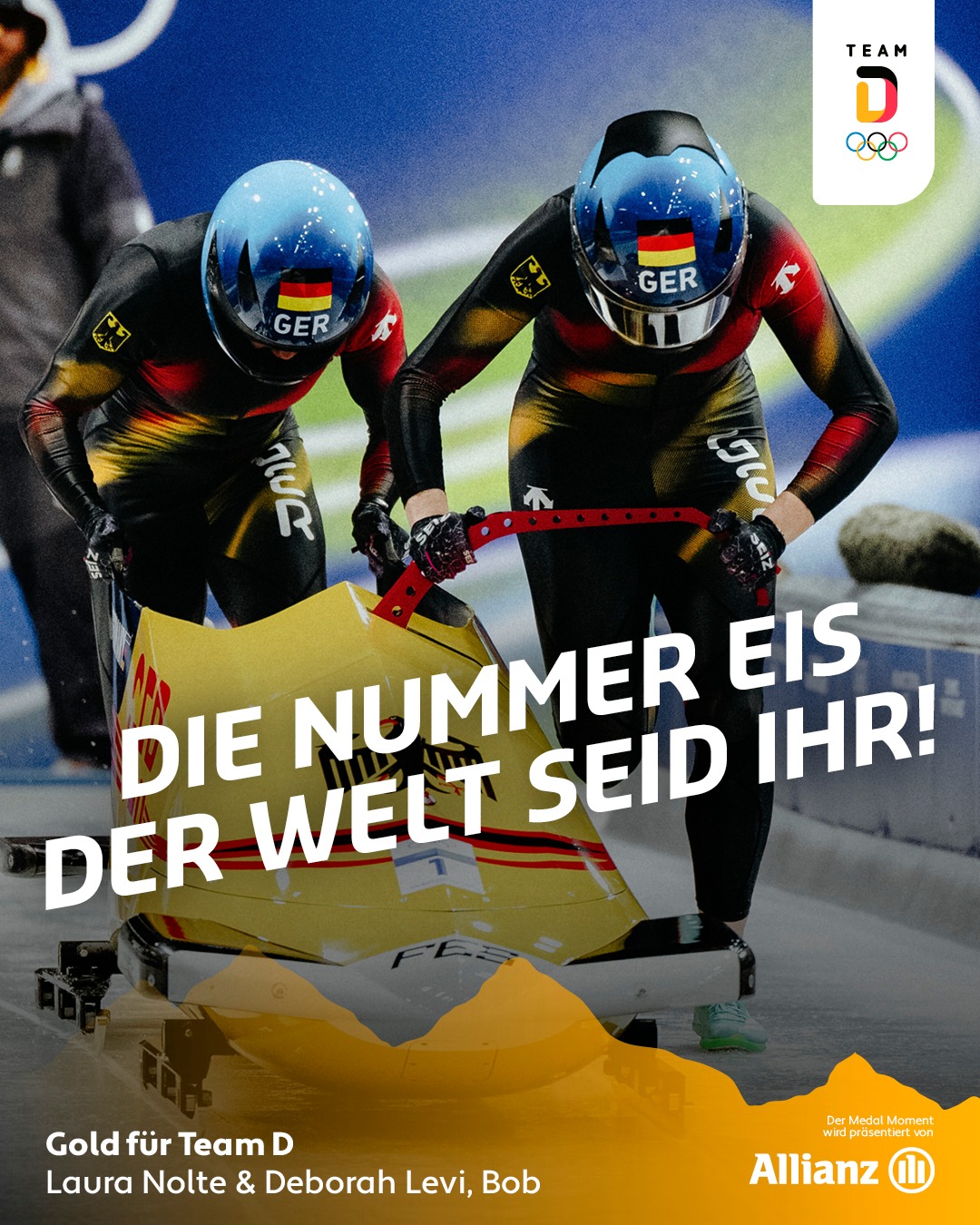
Germany’s sliding sport athletes made a strong impression. Laura Nolte (GER) and Deborah Levi (GER) captured gold in the two-woman bobsleigh, with Lisa Buckwitz (GER) earning silver in the same event. Matthias Sommer (GER) added silver in the four-man bobsleigh, confirming Germany’s continued strength in high-speed ice track competition.
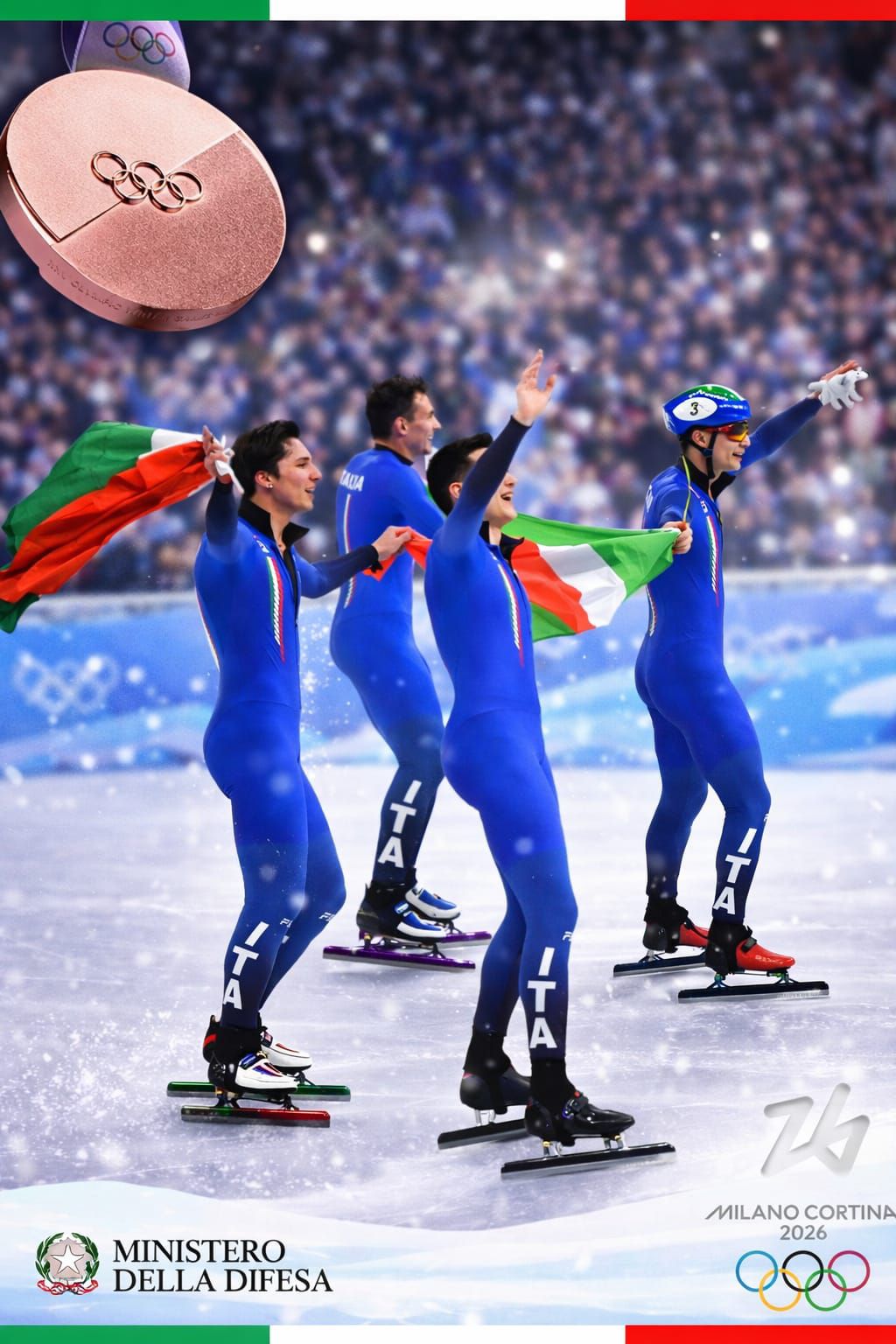
Italy continued to shine across disciplines. In short track speed skating, Pietro Sighel (ITA), Andrea Cassinelli (ITA) and Luca Spechenhauser (ITA) contributed to Italy’s bronze medal in the men’s 5000m relay. In speed skating, Andrea Giovannini (ITA) earned bronze in the men’s mass start, while Italy’s military athletes also featured prominently in freestyle skiing and other ice disciplines.
Over the course of Milano Cortina 2026, more than 300 military athletes from France, Italy, Switzerland, Germany, Belgium, Poland, Lithuania, Finland, Bulgaria and Kazakhstan competed at the Winter Olympic Games. Among them, athletes from Italy (ITA), France (FRA), Switzerland (SUI), Germany (GER) and Belgium (BEL) secured podium finishes.
Italy (ITA) led the military medal table with 10 gold, 5 silver and 12 bronze medals, representing 14 military gold medallists, 9 military silver medallists and 17 military bronze medallists across individual and team events.
France (FRA) recorded 5 gold, 6 silver and 4 bronze medals, corresponding to 9 military gold medallists, 6 military silver medallists and 4 military bronze medallists.
Switzerland (SUI) achieved 5 gold, 7 silver and 8 bronze medals, with 5 military gold medallists, 11 military silver medallists and 14 military bronze medallists, reflecting consistent performances across ski mountaineering, freestyle skiing and curling.
Germany (GER) secured 5 gold, 8 silver and 4 bronze medals, represented by 8 military gold medallists, 9 military silver medallists and 5 military bronze medallists, particularly in sliding sports and bobsleigh.
Belgium (BEL) marked a historic milestone with 0 gold, 0 silver and 1 bronze medal, earned by 2 military bronze medallists, representing a landmark achievement for its defence sports programme.
In total, military athletes were represented across numerous Olympic medal events in alpine skiing, biathlon, ski mountaineering, short track, bobsleigh, curling, speed skating, snowboard cross and freestyle skiing, illustrating the structural strength and competitive depth of military sport programmes.
As the Olympic flame was extinguished in Milano Cortina, the legacy of athletes in uniform remained firmly embedded in the story of these Games, not only through medal counts, but through resilience, teamwork and performance under pressure, embodying once again the enduring spirit of Friendship through Sport.
(Source: CISM Media & Communication Department - Pictures: Equipe de France Olympique et Paralympique, Ministero della Difesa, and Team Deutschland)